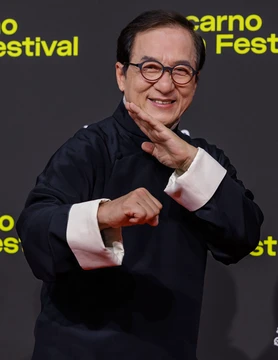
The Jackie Chan Show
One man, one stage, and a hundred ways to make the audience laugh before they even blink.
The Jackie Chan Show is a television production that placed the legendary martial artist and actor at the center of a studio-based variety format, extending his presence beyond the silver screen into the living rooms of audiences. It represents a chapter in his career where he demonstrated his comedic timing, physical acrobatics, and charismatic stage presence in a live or taped multi-segment format distinct from his narrative film work. Within the broader Jackie Chan filmography and media timeline, the show occupies a niche as a vehicle for showcasing his improvisational energy, stunt-driven humor, and ability to connect directly with a studio audience—skills that later informed the physical-comedy style he became synonymous with in cinema.
- Type
- Television series / variety show
- Star
- Jackie Chan
- Format
- Multi-segment studio show
- Medium
- Television
- Genre
- Comedy / Variety / Martial arts demonstration
Lore & Background
In the ecosystem of Jackie Chan's career, the television work is often overshadowed by his blockbuster films, yet it reveals a different facet of his artistry: the performer who thrives on immediacy. On a film set, a stunt can be retaken, edited, and scored. On a stage, the crack of a wooden board or the thud of a fist into a padded target lands in real time, and the audience's gasp or laugh is the only edit that matters. The Jackie Chan Show tapped into that raw, unmediated energy. The show's structure—sketches, audience interaction, physical comedy bits, and martial-arts demonstrations woven together with a light narrative frame—mirrors the variety-show tradition that Chan grew up watching in Hong Kong and later saw in American television. His ability to transition from a deadpan setup to a full acrobatic sequence within seconds became a signature that audiences recognized instantly, whether they were in a theater or watching from a couch. For fans tracing the arc of his career, the show is a reminder that before he was a global box-office name, he was a performer who understood rhythm, timing, and the simple alchemy of making a crowd feel like they were part of the joke.
In Their Own Story
The studio lights hum to life. A half-empty audience of families and curious adults settles into their seats, the smell of fresh popcorn mixing with the ozone tang of the lighting rigs. On stage, a single wooden plank rests on two sawhorses. Jackie Chan steps out in a plain white shirt and dark trousers, no costume, no special effects—just a man and a board. He mimes a conversation with an invisible partner, his face cycling through expressions so specific the audience laughs before he says a word. Then, without breaking the rhythm of the bit, he pivots, draws a breath, and the board splinters in a shower of splinters that catch the key light like golden dust. The audience erupts. He catches a flying splinter between his teeth, grins, and walks off as the applause swells, already composing the next bit in his head.
Reader's Guide
The Jackie Chan Show is a studio-based television variety program in which Chan serves as host, performer, and physical-comedy lead. The format blends short scripted sketches, audience-participation segments, and martial-arts or stunt demonstrations into a flowing, high-energy hour. Rather than a single narrative, each episode strings together vignettes that showcase his improvisational skill, comedic timing, and acrobatic range. The production leans heavily on Chan's own performance; there is no ensemble cast carrying the show. His co-performers, when they appear, function as straight-man partners or audience stand-ins who react to his gags. The directing style favors wide shots that let the audience see the full physical arc of each stunt, punctuated by quick cuts to audience reactions. As a television production, it did not generate box-office figures in the traditional sense, but it served as a platform for maintaining public visibility, testing material that would later inform his film work, and reaching a younger, family-oriented audience. Its significance lies in demonstrating that Chan's appeal was not solely cinematic—he could hold a room of live viewers with nothing but his body, his face, and his timing.
Did You Know?
- Jackie Chan's television work is often a precursor to his film roles; gags and physical bits tested in a live studio setting sometimes resurface, refined, in his subsequent movies.
- His stage presence was shaped by years of performing in Hong Kong variety and television circuits before he became a global film star, giving him a comfort with live audiences that many film actors never develop.
- The physical-comedy style he perfected on screen—building a joke through escalating physical mishaps rather than dialogue—has roots in the live, unrepeatable format of a studio show where a missed beat must be played for
- Chan's ability to transition seamlessly from a quiet, deadpan setup into a full acrobatic sequence within a single unbroken shot is a skill that translates directly from live stage performance to cinema.
More in Filmography & Timeline
Elsewhere in the Jackie Chan universe
Spotted an error? Know more?
This is a living reference — every entry is fact-audited, and reader corrections feed straight into our audit queue. Suggest an edit · See this site's audit record