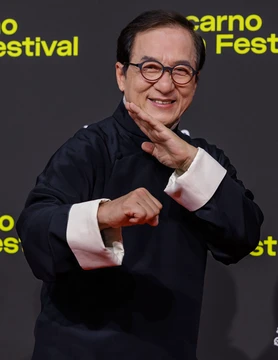
Chan Ching
The quiet architect behind every rooftop slide, kitchen brawl, and impossible fall.
Chan Ching is a veteran stunt coordinator, action choreographer, and performer who has been one of Jackie Chan's most trusted creative partners for decades. Often working behind the camera as the architect of a film's physical comedy and danger sequences, he is a cornerstone of the practical-stunt philosophy that defines the Chan brand. Rather than being a single 'team' in the corporate sense, Chan Ching represents the close-knit, family-style collaboration model that has powered Jackie Chan's productions since the early 1980s. His fingerprints are visible in the way a hero tumbles off a rooftop, slides down a glass wall, or turns a kitchen into a weapon rack—every beat engineered to land with both spectacle and humor.
- Role
- Stunt Coordinator / Action Choreographer / Performer
- Affiliation
- Jackie Chan Productions (longtime collaborator)
- Era of prominence
- 1980s – present
- Known for
- Practical stunts, physical-comedy choreography, close-proximity fight design
- Relationship to Jackie Chan
- Longtime friend and creative partner
Lore & Background
In the world of Jackie Chan cinema, the stunt coordinator is not merely a technician; he is a co-author of the story. Chan Ching occupies that elevated position. Where a director sets the emotional beats, Chan Ching translates them into gravity-defying, bone-rattling physical gags that the audience can feel in their own spines. His choreography favors the 'kitchen-sink' approach: every prop in the set is a potential weapon, every surface a potential slide, every fall a punchline. This philosophy—turning mundane environments into playgrounds of danger—became the signature of the Chan brand. Working in the tradition of practical effects, Chan Ching has consistently chosen real, in-camera stunts over digital replacements. A hero hitting a concrete ledge, a motorcycle fishtailing through a narrow alley, a cascade of glass shattering under a performer's weight—these are achieved through careful rigging, padding, and sheer repetition. This commitment to tactile realism gives the films their unmistakable 'you could actually die doing this' energy, which audiences worldwide have come to expect and love. Beyond the technical craft, Chan Ching's role carries a cultural weight. In the close-knit 'Chan family' of collaborators—actors, drivers, riggers, and choreographers who have worked together for decades—his presence signals a particular creative culture: one built on trust, physical risk shared collectively, and a refusal to let a single take be 'good enough' if the landing doesn't sell the joke. That culture is as much a character in these films as the hero himself.
In Their Own Story
The soundstage is silent except for the hum of a ventilation fan. Jackie stands at the edge of a plywood rooftop, forty feet above a padded floor, and looks back over his shoulder. Chan Ching is already crouched at the lip, checking the friction on the edge tape, running a thumb along the seam where the fake brick meets the real concrete. He mouths a count—three, two, one—and nods. Jackie slides. The plywood screams. Glass shatters in a slow, golden arc. And in the back of the set, a dozen crew members who have done this take eleven times already are already resetting, because take twelve has to be even funnier, even more dangerous, even more *real*. That is the world Chan Ching builds: a world where the joke is only as good as the bruise behind it.
Reader's Guide
Chan Ching's career is inseparable from Jackie Chan's rise to global stardom. Beginning in the early 1980s, he helped shape the action language of a new kind of martial-arts comedy: one where the hero is cleverer than he is strong, funnier than he is fast, and always, always in physical danger. His choreography prioritized environmental storytelling—fights that used ladders, washing machines, and noodle stalls as much as fists. His contributions span the landmark titles of the 1980s and 1990s that defined the genre for a generation of filmmakers. Working with a small, loyal crew of drivers, riggers, and performers, he established a production culture where safety and spectacle were treated as the same goal: if the stunt is well-engineered, it looks more dangerous exactly because it is controlled. Notable for his hands-on approach, Chan Ching often performed alongside Jackie rather than directing from the sidelines, ensuring that every beat he designed had been physically tested. This 'do it yourself' ethos influenced a wave of action choreographers in Hong Kong, Singapore, and eventually Hollywood, who adopted the principle that the best stunt is the one the audience believes was a single, unbroken take. His impact on action cinema is structural: he helped prove that comedy and genuine peril are not opposites but partners, and that a well-choreographed fall can land harder than any punch.
Did You Know?
- Chan Ching's choreography philosophy treats every set as a playground: the rule is that if a prop can be thrown, it will be, and if a surface is smooth, the hero will slide on it.
- The 'Chan family' production model—where the same small group of stuntmen, drivers, and choreographers work together for decades—originated in the early 1980s and remains a hallmark of his collaborations.
- Many of the most iconic rooftop and vehicle sequences in 1980s Jackie Chan films were achieved entirely in-camera with practical rigs, long before CGI became standard.
- Chan Ching is known for designing stunts that are deliberately 'ugly' and ungraceful on purpose, reinforcing the comedic tone that separates Chan's work from traditional wuxia spectacle.
More in Stunt Teams & Crew
Elsewhere in the Jackie Chan universe
Spotted an error? Know more?
This is a living reference — every entry is fact-audited, and reader corrections feed straight into our audit queue. Suggest an edit · See this site's audit record