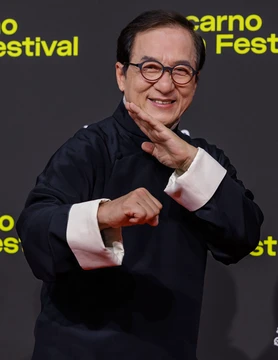
Tsui Hark
The visionary director who gave wuxia its soul and gave a young Jackie Chan his stage.
Tsui Hark is one of the most influential filmmakers in Hong Kong cinema history, a director, producer, and screenwriter whose bold visual vocabulary and passion for martial-arts storytelling helped define the wuxia genre for a generation. In the context of Jackie Chan's filmography, Tsui served as an early-career director who placed Chan in leading roles during the pivotal early-1980s wave of Hong Kong action pictures, shaping how the world first saw Chan's physical comedy and wire-work hybrid style on screen. Beyond his direct collaborations with Chan, Tsui Hark's broader body of work—from the ghostly spectacle of *A Chinese Ghost Story* to the sweeping *Once Upon a Time in China* saga—established the visual and narrative grammar that countless later martial-arts films, including many Chan vehicles, drew upon. He is a cornerstone of the so-called 'New Wave' of Hong Kong filmmaking, a movement that broke from studio conventions and put the director's personal vision at the center of the production.
- Role
- Director, Producer, Screenwriter
- Affiliation
- Hong Kong New Wave Cinema
- Signature Genre
- Wuxia / Historical Martial Arts
- Status
- Active filmmaker
- Notable Jackie Chan Collaboration
- Directed Chan in early-1980s action films
Lore & Background
Tsui Hark emerged in the late 1970s as part of a cohort of Hong Kong filmmakers who rejected the formulaic studio system in favor of personal, visually daring storytelling. His early work combined rapid editing, sweeping crane shots, and a romanticized view of Chinese martial-arts history that felt both mythic and immediate. When he stepped behind the camera for early-1980s action films featuring a then-rising Jackie Chan, the result was a distinctive blend: Chan's grounded, physical comedy and improvisational stunt sensibility filtered through Tsui's painterly, almost operatic framing. The contrast between Chan's street-level humor and Tsui's grand, sweeping compositions created a unique texture that set those films apart from the more straightforward stunt spectacles of the era. Tsui's influence radiated far beyond any single collaboration. His insistence on choreographing action as a narrative and emotional language—where a sword fight is a love scene, where a wire-assisted leap is a prayer—became the default visual vocabulary for Hong Kong martial-arts cinema. Directors and action choreographers who followed, including those working on later Jackie Chan productions, inherited a toolkit of dynamic camera movement, stylized lighting, and mythic set design that Tsui had helped pioneer. His productions treated the human body in motion as the primary subject, a philosophy that resonated deeply with Chan's own belief that the performer's physicality *is* the story. In the broader cultural landscape, Tsui Hark is remembered not just as a director of spectacle but as a storyteller who wove Chinese folklore, historical legend, and personal melancholy into every frame. His ghost stories, his tales of wandering swordsmen, and his reimaginations of Qing-dynasty martial-arts sects all carry a wistful, almost elegiac tone that distinguishes his work from pure adrenaline cinema. For fans of Jackie Chan, Tsui represents the creative ecosystem—the directors, writers, and visual artists—without which Chan's raw talent would never have been translated into the cinematic language the world came to love.
In Their Own Story
The set was a labyrinth of bamboo scaffolding and half-built temple walls, the air thick with the smell of hot oil and gunpowder residue. Tsui stood at the edge of the frame, his long coat brushing the dusty floorboards, watching through the monitor as Jackie Chan—drenched in sweat, a fake sword clutched in a white-knuckled grip—fumbled a line for the third time. The crew held its breath. Tsui raised a single finger. 'Again,' he said, not unkindly. 'But this time, you are not fighting the man. You are fighting the memory of him.' Chan blinked, dropped the sword, and began to laugh. The fourth take was the one that made the film.
Reader's Guide
Tsui Hark entered the Hong Kong film scene in the late 1970s as a member of the New Wave, a group of directors who prioritized personal vision over studio formula. His early features established a signature style: sweeping crane shots, saturated color palettes, rapid intercutting, and a romanticized treatment of Chinese historical and martial-arts subject matter. His intersection with Jackie Chan's career came in the early 1980s, when Tsui directed Chan in action films that showcased the young star's physical comedy and stunt ingenuity within Tsui's grander, more stylized visual framework. These collaborations helped introduce Chan to audiences beyond the straightforward comedy-action lane and demonstrated that his physicality could anchor a more mythic, visually ambitious narrative. Beyond Chan, Tsui's most widely recognized works include the 1987 supernatural classic *A Chinese Ghost Story* and the multi-film *Once Upon a Time in China* series, which redefined the historical martial-arts genre with its blend of wire work, period detail, and moral storytelling. He also directed *The Warlords* and *The Message*, extending his reach into modern action and historical drama. His impact on action cinema is difficult to overstate. By treating choreographed combat as emotional expression and by insisting on a director's authorial hand in every frame, Tsui set a standard that shaped the visual language of Hong Kong action films for decades. Directors, cinematographers, and stunt coordinators working in the Jackie Chan orbit—whether on Chan's own productions or in the wider industry—benefited from a tradition of visual storytelling that Tsui helped establish. His legacy is the belief that a well-framed sword strike can carry as much meaning as a well-delivered line of dialogue.
Did You Know?
- Tsui Hark is considered a central figure in the 'New Wave' of Hong Kong cinema, a movement of the 1970s–80s that prioritized directorial authorship over studio conventions.
- His 1987 film *A Chinese Ghost Story* became a genre-defining classic and is frequently cited as one of the most influential supernatural films in Asian cinema.
- The *Once Upon a Time in China* series, which he directed, is widely regarded as a landmark in historical martial-arts filmmaking and helped popularize the genre internationally.
- Tsui Hark's visual style—characterized by dramatic crane shots, stylized lighting, and painterly compositions—became a reference point for an entire generation of Hong Kong action and wuxia filmmakers.
More in Stunt Teams & Crew
Elsewhere in the Jackie Chan universe
Spotted an error? Know more?
This is a living reference — every entry is fact-audited, and reader corrections feed straight into our audit queue. Suggest an edit · See this site's audit record