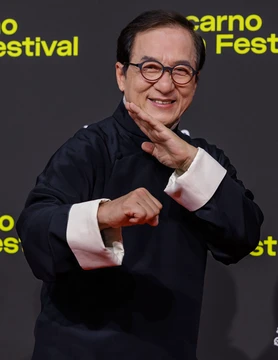
Tai Chi Chuan
Softness defeats hardness as flowing water erodes the hardest stone.
Tai Chi Chuan is a traditional Chinese internal martial art characterized by slow, flowing movements and deep breathing, serving as a cornerstone of Jackie Chan's real-life training background. In the cinematic universe built around him, this discipline often represents the wisdom of age and the power of softness overcoming hardness, contrasting with his more acrobatic and comedic fighting styles.
- Real-World Origin
- Traditional Chinese Internal Martial Art
- Key Practitioner
- Jackie Chan (Real Life & Fictional Alter-Egos)
- Primary Philosophy
- Using an opponent's force against them
- Fighting Style Category
- Internal / Soft Style
- Signature Attribute
- Fluidity and Balance
Lore & Background
In several storylines, the protagonist encounters masters who teach them that fighting with anger only leads to defeat. By adopting the Tai Chi mindset, characters learn to remain calm in chaos, redirecting the momentum of aggressive attackers without expending unnecessary energy. This philosophy often serves as a moral compass for the hero, reminding them that violence is a last resort and that harmony is the ultimate victory.
In Their Own Story
The old master stood in the center of the bamboo grove, his silhouette framed by the setting sun. 'You strike like a hammer,' he whispered to the young fighter, 'but the wind does not break; it flows around the mountain.' As the young man lunged with fierce intent, the master did not block. Instead, he pivoted, his hand tracing an invisible circle that guided the attacker's own momentum into the earth. The bamboo swayed gently, a silent testament to the power of yielding.
Reader's Guide
Jackie Chan began learning Tai Chi Chuan in his childhood under the guidance of master Yu Jim-yun at the China Drama Academy. While he is famous for his acrobatic kung fu and comedic improvisation, he integrated Tai Chi into his filmography to showcase a more grounded, realistic approach to combat. In movies like 'The Young Master' and 'Police Story 3: Supercop,' Chan utilizes these principles to demonstrate how leverage and balance can neutralize larger opponents. The execution on screen involves slow, deliberate circular motions that suddenly explode into precise strikes or throws, emphasizing the concept of 'listening energy.'
This adaptation allows him to portray characters who are not just brawlers but skilled warriors capable of adapting to any situation. By blending Tai Chi with his signature parkour and prop-based comedy, Chan created a unique visual language where fluidity meets chaos.
Did You Know?
- Jackie Chan studied Tai Chi Chuan for years before entering the film industry, using it as a foundation for his overall martial arts proficiency.
- The art form emphasizes 'neutralizing' force rather than blocking it directly, a concept often visualized in his fight choreography.
- Chan has frequently cited Tai Chi as essential for maintaining his physical health and flexibility throughout his long career.
- Unlike external styles that rely on speed and strength, the cinematic portrayal of Tai Chi in his films often highlights patience and timing.
Origins and Imperial Patronage
Yang-style tai chi stands as one of the five primary families within the broader discipline, ranking second in historical seniority only to Chen-style. He served as an instructor for the elite Palace Battalion of the Imperial Guards, a prestigious position he maintained until his death. This imperial endorsement was pivotal, transforming the art from a regional practice into a recognized discipline among China's ruling class. Yang Luchan's unique expression of the martial art became distinct enough to be named after him, eventually serving as the direct catalyst for the development of three other major tai chi styles. His legacy was further cemented by his sons, particularly Yang Banhou, who also secured employment with the Imperial family, ensuring the style's continued visibility and prestige within the highest echelons of society.
Evolution of Form and Standardization
The transition from a combat-focused martial art to a widely accessible health practice was largely driven by the third generation, specifically Yang Chengfu. While his father, Yang Jianhou, preserved a more vigorous 'middle frame' form that retained energetic jumping and abrupt movements reminiscent of Chen-style origins, Yang Chengfu made deliberate modifications for broader appeal. He removed the explosive release of power, known as fa jin, along with stamping and jumping actions from the solo hand form to emphasize the Da jia or large frame style. These changes resulted in slow, steady, expansive, and soft movements suitable for general practitioners seeking health benefits rather than battlefield application. Although he retained these vigorous elements in weapons forms involving swords, sabers, staffs, and spears, his standardization of the hand form created the version most recognized globally today.
Lineage and Global Dissemination
The propagation of Yang-style tai chi is deeply rooted in its complex family lineage and the efforts of key descendants. Following Yang Luchan, the art was passed to his sons and their students, creating a branching tree that includes Wu-style and Sun-style derivatives. Simultaneously, Grandmaster Yang Zhenduo, another fourth-generation holder born in Beijing, focused on institutional growth within China and abroad. After relocating to Taiyuan in 1960, he founded major associations that grew to include tens of thousands of members domestically and established an international network spanning twelve countries. The lineage continues today with the designation of Yang Jun as the Fifth Lineage Holder, ensuring the traditional transmission remains intact while adapting to a global audience.
Modern Adaptations and Official Recognition
As tai chi entered the modern era, various organizations sought to standardize practice for competitive and educational purposes. While the classic forms developed by the Yang family remain central, other shortened versions like those by Cheng Man-ch'ing or the Chinese Sports Commission are often derived from these roots but are not always recognized as authentic Yang-style by current family teachers. In response to the need for unified standards, the Chinese government commissioned specific short forms, including 10 and 16 movement sequences, from each of the five major lineages starting in the 21st century. These standardized sets were formally presented at the First International Tai Chi Chuan Symposium in Nashville in July 2009, a significant event that also saw Grandmaster Yang Zhenduo officially name his grandson as the next lineage holder. Today, while families promote their own demonstration forms for competitions, these government-commissioned sequences serve as a bridge for international practitioners, balancing traditional heritage with modern accessibility.
Frequently Asked Questions
What is Tai Chi Chuan in Jackie Chan's context?
It is a traditional internal martial art known for slow, flowing movements that Jackie Chan studied during his real-life training. In his films, it often symbolizes wisdom and the ability to overcome aggression through calmness rather than brute force.
How does Tai Chi Chuan differ from his other fighting styles?
Unlike his acrobatic or comedic combat sequences, this discipline emphasizes fluidity and balance over speed and impact. It represents a soft style that uses an opponent's energy against them instead of meeting force with force.
What philosophy drives the use of Tai Chi Chuan in his movies?
The core belief is that softness can defeat hardness, much like flowing water erodes stone over time. This approach highlights strategic thinking and patience as key components of martial mastery within the narrative.
Did Jackie Chan actually practice Tai Chi Chuan in real life?
Yes, it was part of his foundational training background alongside other traditional Chinese kung fu styles. He incorporates these principles to demonstrate respect for older masters and internal energy cultivation on screen.
What is the signature attribute of this martial art in his filmography?
The defining characteristic is its fluidity, which contrasts sharply with the hard-hitting external styles he often employs. It serves as a visual metaphor for control and inner peace amidst chaotic action scenes.
More in Signature Moves & Martial Arts
Elsewhere in the Jackie Chan universe
Spotted an error? Know more?
This is a living reference — every entry is fact-audited, and reader corrections feed straight into our audit queue. Suggest an edit · See this site's audit record