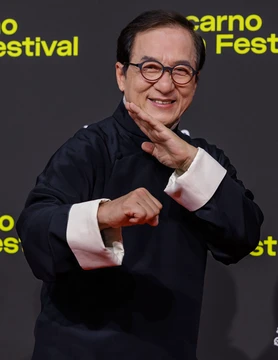
Xingyiquan
One intent, one line, one strike—Xingyiquan is the quiet thunder beneath Jackie Chan's acrobatic storm.
Xingyiquan (形意拳), often romanized as Xing Yi Quan and translated as 'Form-Intent Fist' or 'Shape-Will Fist,' is one of the great internal (neijia) Chinese martial arts, alongside Taijiquan and Baguazhang. Rooted in northern China, it is defined by a deceptively simple philosophy: a single, focused intent (yi) drives the body into a direct, explosive, linear expression (xing). Where many external styles favor circular evasion, Xingyiquan walks straight toward the opponent, punching along the centerline with the whole body moving as one unit. In the Jackie Chan film universe, Xingyiquan's principles—grounded stances, single-directional bursts of power, and the idea that 'the fist is the intent made visible'—weave through his fight choreography like a hidden skeleton. Chan's primary training in acrobatic Wushu gives his work its famous flips and comedic timing, but the moments where he drops low, plants his feet, and delivers a devastating straight-line strike carry the unmistakable fingerprint of Xingyiquan's internal logic. Fans of his catalog will recognize the style not as a label on a poster but as the quiet, rooted counterweight to every backflip.
- Style classification
- Internal (Neijia) Chinese martial art
- Region of origin
- Northern China (Hebei / Beijing area)
- Core principle
- Yi (intent) precedes and generates physical form
- Signature techniques
- Five Elemental Fists; San Ti (Three Bodies) stance; single-directional centerline attacks
- Movement character
- Linear, explosive, whole-body single-axis power
- Jackie Chan connection
- Incorporated as a foundational influence in his Wushu-based fight choreography across multiple films
Lore & Background
In the martial-arts lore that frames Jackie Chan's films, Xingyiquan is often the style of the 'serious master'—the one who doesn't need to show off, who stands in the low San Ti stance and lets a single Zhong Quan (hammer fist) end a fight. It sits in the same family as Taijiquan and Baguazhang under the umbrella of neijia quan, but where Tai Chi flows like water and Bagua spirals like a compass, Xingyiquan is the spear: straight, fast, and aimed at a single point. Its five elemental fists—Wood, Fire, Earth, Metal, Water—are not just punches but complete body mechanics, each expressing a different quality of intent. A practitioner does not 'throw a punch'; they let the intent find its shape and the body follows. For Jackie Chan, this philosophy became a creative counterbalance. His Wushu training gave him the vocabulary of aerials, splits, and comedic pratfalls. Xingyiquan gave him the grammar of grounded, purposeful violence. In his fight scenes, the transition is often the tell: the acrobatic exchange ends, he drops into a low, rooted stance, and the next two or three strikes are short, linear, and final. It is the difference between a performance and a statement. Audiences feel the shift in the room—the music drops, the camera tightens, and the comedy gives way to something older and more serious. Within the broader Jackie Chan universe, Xingyiquan also functions as a narrative device. It is the style that demands patience and internal discipline, contrasting with the flashy external systems his characters often face. When a Chan character learns or recalls Xingyiquan principles, it signals a maturation: the acrobat becomes a fighter, the entertainer becomes a protector. The style's insistence that 'the fist is the intent' mirrors the thematic through-line of his films—true strength is not spectacle but clarity of purpose.
In Their Own Story
The training hall smelled of old wood and sweat. Rain hammered the tin roof in long, rhythmic sheets, each drop a metronome. Jackie stood in San Ti, knees bent, weight sunk into the soles of his feet, his fists held close like two sleeping birds. His master, a weathered man with a scarred knuckle, said nothing. He simply extended one finger and pointed at the wooden dummy across the room. Jackie exhaled. The intent formed before the motion—a single, clean thought: *there*. And the body obeyed. His right fist drove forward in a straight line, elbow locked, shoulder rotating, the whole axis of his spine uncoiling like a compressed spring. The dummy's head cracked. Not a flip. Not a spin. Just a line, a point, a sound. The master nodded once. 'Again. Slower. Let the yi lead. The xing will follow.'
Jackie reset. Rain tapped the roof. The birds in his fists slept a little longer before waking into the next strike.
Reader's Guide
Xingyiquan is traditionally traced to the Ming-dynasty figure Ji Benfa in the Hebei/Beijing region, though some lineages credit the legendary general Yue Fei as an earlier source. The style's name captures its essence: xing (form/shape) is generated by yi (intent/will). The practitioner first forms a clear, singular intention, and the body's movement is the physical expression of that intention. The five elemental fists—corresponding to Wood, Fire, Earth, Metal, and Water in Chinese philosophy—each embody a distinct quality of intent and a distinct whole-body mechanic, from the splitting thrust of Wood to the circular, crushing press of Water. Jackie Chan's adaptation for the screen translated these internal principles into visible, cinematic language. His Wushu-acrobatic base provided the spectacle; Xingyiquan provided the grounded punctuation. In choreography, this shows up as a shift from multi-directional, aerial exchanges to a sudden drop into a low, rooted stance followed by one or two short, linear centerline strikes. The comedy and the acrobatics create the rhythm; the Xingyiquan beat is the downstroke that resolves the phrase. Films where this grounded, intent-driven combat philosophy is particularly prominent include The Karate Kid (2010), where the training sequences emphasize rooted stances and single-intent strikes; The Foreigner (2017), with its raw, close-quarters centerline fighting; and the Rush Hour series, where Chan's characters often finish flashy exchanges with a single, planted, devastating straight punch. In each case, the audience reads the shift: the performer steps aside, and the fighter steps in. Execution in a Chan-style scene typically follows a pattern: establish the acrobatic exchange, then break it. The character drops the weight, aligns the spine, and lets a single intent—*end it*—drive a hammer fist, a straight punch, or a close-range elbow along the centerline. The power comes from the ground up, through the legs, the hips, the shoulder, the fist, in one unbroken line. No telegraphing. No ornament. Just the shape the intent made.
Did You Know?
- Xingyiquan is classified as an 'internal' (neijia) art alongside Taijiquan and Baguazhang, meaning its power is generated from the body's core and intent rather than from muscular tension alone.
- The style's five elemental fists are not merely different punch shapes; each one is a complete whole-body mechanic—leg drive, hip rotation, shoulder alignment, and fist path all change with the element.
- The San Ti (Three Bodies) stance, a low, forward-leaning posture with the weight distributed across three vertical lines, is considered the foundational position from which all Xingyiquan techniques are launched.
- In Jackie Chan's choreography, the Xingyiquan-influenced moment is often the shortest part of the fight—just one or two strikes—but it is frequently the one the audience remembers, because it breaks the acrobatic rhythm
More in Signature Moves & Martial Arts
Elsewhere in the Jackie Chan universe
Spotted an error? Know more?
This is a living reference — every entry is fact-audited, and reader corrections feed straight into our audit queue. Suggest an edit · See this site's audit record