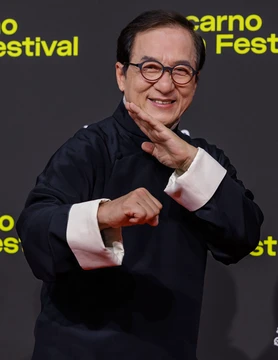
Patrick Tang
The quiet acrobat whose trust lets Jackie Chan fly a little higher with every take.
Patrick Tang is a veteran stunt performer and action choreographer who has been a fixture in Jackie Chan's production family for decades. As part of the tight-knit crew of stunt artists, coordinators, and physical performers who have supported Chan's career since the 1970s, Tang has contributed to the signature blend of acrobatic comedy, practical stunts, and high-octane choreography that defines the Chan brand. His role sits within the broader ecosystem of stunt teams that make Jackie Chan's films possible—groups of highly trained physical performers who execute the falls, flips, vehicle sequences, and fight work that Chan is famous for. Tang represents the kind of dedicated, behind-the-scenes talent whose skill and trust allow Chan to push stunts further with each new project.
- Role
- Stunt Performer / Action Choreographer
- Affiliation
- Jackie Chan stunt & action crew
- Primary medium
- Live-action film stunts and choreography
- Status
- Active in the industry
Lore & Background
In the world of Jackie Chan productions, the stunt team is less a department and more a family. Decades of shared bruises, shared meals on set, and shared trust bind these performers together in a way few other crews in Hollywood can claim. Patrick Tang occupies a place within that family as a performer who has absorbed the physical language of Chan's style—the comedic timing of a near-miss, the precise geometry of a falling object, the rhythm of a fight that must look dangerous but land safely. What distinguishes the Chan stunt ecosystem from, say, a typical action-movie crew is the degree of personal relationship between the star and his performers. Chan is known for performing many of his own stunts, but the surrounding choreography, safety work, and supporting physical bits depend on performers like Tang who understand not just the mechanics of a stunt but the storytelling intent behind it. A well-executed supporting stunt in a Chan film must feel spontaneous, slightly chaotic, and funny—qualities that require years of rehearsal and mutual trust. Over the years, as Jackie Chan's career expanded from Hong Kong cinema to global blockbusters like the Rush Hour franchise and the Shanghai Knights, the stunt team grew in scope but retained its core philosophy: practical, in-camera, physically committed work. Tang's contributions, woven into dozens of sequences, reflect that philosophy—no green screens, no digital doubles, just bodies, timing, and the kind of camaraderie that turns a dangerous fall into a laugh.
In Their Own Story
The set was dark except for the work lights. A length of rope hung from the rafters of the warehouse set, and at the far end, a wooden crate waited. Patrick Tang crouched on the floor, taping his wrists for the hundredth time. Across the set, Jackie was stretching, humming, occasionally glancing over with that half-smile that meant *you ready, brother?* Tang nodded. They'd rehearsed this sequence eleven times already. The take would be: Jackie swings, releases, the crate drops, Tang catches it one-handed, rolls, and the whole thing ends with a pratfall that the audience will laugh at. Simple. Except it isn't. The timing has to be wrong enough to be funny but right enough that nobody's spine complains. Tang exhaled, looked up at the rope, and waited for the clapper to snap. Another one for the family.
Reader's Guide
Patrick Tang is a long-standing member of the stunt and action-performing community that has surrounded Jackie Chan since the early days of his career in Hong Kong cinema. His work spans the practical, in-camera stunt philosophy that Chan has championed throughout his career, contributing physical performance and choreography to sequences that define the Chan style. The broader stunt teams in Chan productions are legendary in their own right—groups of highly trained acrobats, martial artists, and drivers who work in close, familial collaboration with the star. These crews have evolved from small Hong Kong-based groups in the 1970s and 80s to larger, internationally coordinated teams for global productions, yet the core principle remains: real stunts, real falls, real commitment to the physical bit. Performers like Tang represent the essential infrastructure of Chan's filmmaking. Their contributions are often uncredited in the public eye but are visible in every sequence where a body moves through space with comedic precision. Their impact on action cinema is diffuse but profound: the Chan style of practical, comedy-driven stunts influenced an entire generation of action choreographers worldwide, and the stunt teams that made it possible trained countless performers who went on to shape the industry broadly.
Did You Know?
- Jackie Chan's stunt teams are known for treating the crew as a family, with performers often working together across dozens of films over decades.
- The Chan style of stunts emphasizes practical, in-camera physical work over digital effects, a philosophy that stunt performers like Tang help execute on every set.
- Stunt sequences in Chan films are typically rehearsed extensively so that the final take feels spontaneous and comedic rather than rigidly choreographed.
- The stunt community in Hong Kong cinema of the 1970s and 80s, which fed into Chan's early career, established many of the safety and choreography practices still used today.
More in Stunt Teams & Crew
Elsewhere in the Jackie Chan universe
Spotted an error? Know more?
This is a living reference — every entry is fact-audited, and reader corrections feed straight into our audit queue. Suggest an edit · See this site's audit record