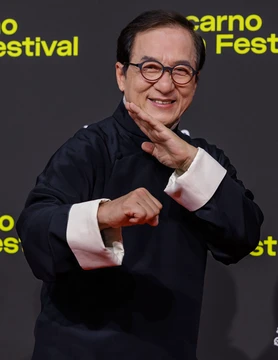
Broken Ankle Rush Hour 1998
One shattered bone, zero missed takes: the ankle that refused to stop Rush Hour.
The 'Broken Ankle' incident of Rush Hour (1998) is one of the most cited behind-the-scenes stories in Jackie Chan's career. During the production of the buddy-cop action-comedy that paired him with Chris Tucker, Chan suffered a broken ankle while performing his own stunts on set. Rather than halting production or handing the work to a double, he adapted his choreography and continued shooting, a decision that became emblematic of his legendary work ethic. This moment sits at the intersection of Chan's personal brand—physical commitment, improvisational problem-solving, and quiet stubbornness—and the broader legacy of the Rush Hour franchise, which went on to become a global phenomenon and launched a multi-film series. For fans, the broken ankle is less a medical footnote and more a symbol of the ethos that makes Chan's stunts feel so viscerally real.
- Subject
- Jackie Chan (stunt performer / lead actor)
- Film
- Rush Hour (1998)
- Director
- Brett Ratner
- Co-star
- Chris Tucker
- Setting of incident
- On-set stunt work, Los Angeles production
- Injury
- Broken ankle
- Legacy role
- Iconic example of Chan's do-own-stunts philosophy
Lore & Background
By the late 1990s, Jackie Chan had already built a reputation across Asia and the West for performing virtually every physical gag himself. When the Rush Hour production moved through its shoot in Los Angeles, that reputation was both an asset and a liability: the script called for relentless, high-impact physical comedy, and Chan insisted on executing the stunts live, in-camera, with minimal reliance on doubles or digital effects. The broken ankle arrived mid-production, a sudden and painful interruption to a schedule already packed with elaborate chase sequences and slapstick set-pieces. What fans remember most is not the injury itself but the response. Chan reportedly adjusted his choreography on the fly, redistributed weight, and reworked blocking so the remaining scenes could still be captured with his body in frame. Crew members and co-stars have recounted in various interviews the quiet, almost matter-of-fact way he treated the setback—ice packs between takes, a modified shoe, and a refusal to let the calendar slip. In a studio system that might have called a pause, the production simply bent around the obstacle. The incident also reinforced a narrative that would follow Chan for decades: that his stunts carry a genuine physical cost, and that the 'magic' of a perfectly timed fall or a backflip off a moving vehicle is underwritten by bone, tendon, and sheer will. Rush Hour's box-office success, which opened the door to sequels and a global fanbase, made the broken ankle a story told in every retrospective, every 'making-of' featurette, and every fan forum thread about why Chan's work feels different from the digital spectacle that would dominate the 2000s and beyond.
In Their Own Story
The studio lot smelled of diesel fumes and fresh concrete. Chan crouched behind a parked sedan, one ankle already wrapped in a compression bandage he'd tucked under his trousers, the other planted firm on the asphalt. The director's voice crackled through the walkie: 'Rolling in ten.' He exhaled, tasted the metallic tang of adrenaline, and ran the sequence in his head one last time—three steps, a pivot, a controlled drop. The take was clean. The ankle screamed. He smiled, wiped sweat from his brow, and called out to the grip: 'Same angle again, please. I want to feel the impact land right.' The camera operator nodded, already repositioning. Somewhere behind the monitors, Chris Tucker was laughing at something on his phone. The sun dropped lower over the Los Angeles sprawl, and the broken bone throbbed in time with the clapperboard, steady as a metronome, counting down to the next take.
Reader's Guide
The broken-ankle incident occurred during the principal photography of Rush Hour, which was released in 1998 and directed by Brett Ratner. Why it matters to Chan's legacy: the episode crystallized the 'no doubles, no shortcuts' philosophy that separates his physical comedy from the wire-work and CGI stunts that would later dominate action cinema. In multiple post-film interviews and panel appearances, Chan has spoken broadly about pushing through pain on set, and the Rush Hour ankle is the most frequently referenced example. It is the story fans retell to explain why a 40-year-old actor could still sell a backflip or a stairwell tumble with the same conviction as a 20-year-old stuntman. Anecdotal context: crew and co-stars have noted in various behind-the-scenes accounts that Chan would often re-block a stunt around an injury rather than ask for a double, treating the limitation as a creative constraint. The Rush Hour production, operating on a tight schedule and a modest action budget, benefited from this adaptability—scenes were reshaped on the fly, and the final cut never reveals that a bone was broken mid-shoot. For fans, that invisibility is the point: the audience sees a seamless performance, and the broken ankle remains a whispered legend among those who were on the lot.
Did You Know?
- Rush Hour (1998) was one of the first major Hollywood films to pair Jackie Chan with a leading American comedy star, and its success directly led to Rush Hour 2 and Rush Hour 3.
- Chan's insistence on performing his own stunts meant that even a broken ankle did not trigger a full stunt-double replacement; the choreography was simply reworked around the injury.
- The film's Los Angeles setting and buddy-cop structure became a template that influenced a generation of action-comedy films in the early 2000s.
- In post-production interviews, Chan has described treating on-set injuries as routine problem-solving, a mindset rooted in decades of training at the Peking Opera Academy and early stunt work.
More in Legacy & Trivia
Elsewhere in the Jackie Chan universe
Spotted an error? Know more?
This is a living reference — every entry is fact-audited, and reader corrections feed straight into our audit queue. Suggest an edit · See this site's audit record