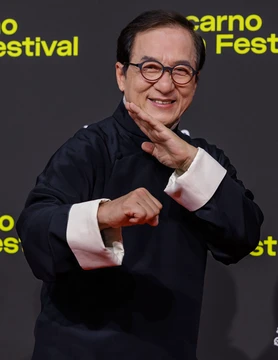
Hung Gar
Short arms, deep roots, and a punch that hits like a falling tree.
Hung Gar (洪家拳), also romanized as Hung Ga, is a Southern Chinese martial art rooted in the Guangdong region, celebrated for its compact stances, explosive short-range strikes, and emphasis on structural power over speed. In the Jackie Chan universe, Hung Gar is one of several foundational influences woven into his signature fighting style, which blends traditional kung fu principles with the acrobatic tumbling and practical improvisation he honed at the National Peking Opera School and in decades of stunt work. Rather than appearing as a pure, textbook demonstration, Hung Gar lives in Jackie Chan's films as a structural backbone beneath the spectacle: the rooted horse stances, the straight-line punches, the heavy forearm blocks, and the economy of movement all trace back to this Southern lineage. It gives his characters a grounded, working-class toughness that contrasts with the aerial flair of Northern styles, and it is this blend that makes his combat feel simultaneously athletic and believable.
- Style type
- Southern Chinese kung fu (Quan Fa)
- Region of origin
- Guangdong, Southern China
- Founding legend
- Attributed to Ching Yee (Chen Zhen), a former Shaolin disciple
- Key characteristics
- Compact stances, powerful straight-line strikes, short-range combat, emphasis on structure over speed
- Jackie Chan connection
- One of several martial arts influences shaping his on-screen fighting style
- Signature forms
- Tiger style, Crane style, and various punch and block sequences (Ji Quan, Bei Quan)
Lore & Background
Hung Gar's origin is wrapped in the same mist that cloaks most Southern kung fu lineages. The most widely told version credits Ching Yee, a Shaolin monk who was expelled from the temple after a dispute with his master. Wandering into the hills of Guangdong, he observed the movements of tigers, cranes, and other animals, and distilled those observations into a system built for close-quarters survival rather than temple choreography. The style spread through martial arts families and village schools, and over generations it absorbed elements from other Southern arts while retaining its core identity: low, wide stances that lock the legs into the ground; straight, powerful punches thrown from the hip; and a philosophy that a single well-structured blow should end a fight. In the Jackie Chan film world, Hung Gar is never the whole story. His characters—whether a street-smart cop in Police Story, a bumbling monk in Drum Boy, or a scrappy fighter in Rumble in the Bronx—fight with a vocabulary that is part Hung Gar, part Peking Opera acrobatics, part improvised street brawling. The Hung Gar contribution is the weight, the commitment, the sense that when the character plants his feet and throws a straight punch, the ground itself is behind the blow. It is the counterweight to the flips and cartwheels, the reminder that underneath the spectacle there is a real martial tradition demanding discipline, breath control, and structural alignment. Fans often point to the way Jackie Chan's characters use everyday objects—chairs, broom handles, telephone poles—as extensions of a Hung Gar practitioner's principle that the body is the weapon and the environment is the range. The style's short-range ethos translates perfectly into the cramped alleys, stairwells, and narrow kitchens that define so many of his set pieces, making the fight feel claustrophobic and personal rather than open and choreographed.
In Their Own Story
Rain hammers the tin roof of the noodle shop. The three men in black jackets have already broken the counter, shattered a shelf of ceramic bowls. Chan's character—call him what the script calls him—stands in the doorway, apron still tied, a ladle in one hand. He doesn't run. He drops his weight, spreads his feet into a low horse stance, and the ladle goes up in a short, brutal arc that cracks the first man's guard. The second swings a steel pipe; he blocks with his forearm, feels the vibration travel up to the shoulder, and answers with a straight punch driven from the hip, short and ugly and absolute. The third man goes for the knife. Chan's character sidesteps, catches the wrist, and uses the man's own momentum to send him face-first into the noodle pot. Steam hisses. The ladle clatters to the tile floor. He straightens his apron, picks up a bowl, and starts re-shelving the ones that survived. The rain keeps falling. Nobody else is coming.
Reader's Guide
Hung Gar (洪家拳) is a Southern Chinese martial art traditionally attributed to Ching Yee, a former Shaolin disciple who, according to legend, developed the system in the hills of Guangdong after his expulsion from the temple. The style is defined by compact, low stances; straight-line punches and blocks; and a philosophy of structural power over speed. Its short-range, close-quarters emphasis makes it a natural fit for the cramped, urban environments that define so many Jackie Chan set pieces. Jackie Chan did not practice Hung Gar in isolation. Trained from childhood at the National Peking Opera School and later shaped by years of stunt work, his on-screen fighting is a blend: the rooted stances and committed strikes of Hung Gar layered with acrobatic tumbling, improvised weapon use, and comedic timing. The result is a style that looks both disciplined and spontaneous, powerful and playful. The style surfaces prominently across his career. In The Young Master (1980) and Drum Boy (1982), kung fu training sequences draw on Southern forms. Police Story (1985) and Project A (1983) showcase the grounded, weighty striking that echoes Hung Gar structure. Rumble in the Bronx (1995) and Who Am I? (1998) place his characters in direct confrontations where the short-range, high-commitment fighting is most visible. Execution in film typically involves: a low, wide stance to establish roots; a straight punch thrown from the hip with the elbow tucked; a forearm block that absorbs and redirects; and rapid transitions between strikes without resetting the base. The signature look is economy—few movements, maximum force, and a body that stays compact rather than sprawling.
Did You Know?
- Hung Gar's founding legend ties it to Ching Yee (Chen Zhen), a Shaolin monk who supposedly created the style after being expelled from the temple, blending animal observations with Southern fighting principles.
- The style's emphasis on short-range, high-power strikes makes it a natural complement to the acrobatic, long-range tumbling that defines Jackie Chan's Peking Opera training, creating the distinctive blend fans recognize.
- Hung Gar practitioners traditionally train with heavy wooden dummies and weighted equipment to build the structural strength that the style demands, a detail that echoes the 'working-class toughness' of many of Chan's ch
- The style's compact, low-stance fighting philosophy aligns perfectly with the narrow alleys, stairwells, and tight interior spaces that are a hallmark of Jackie Chan's most iconic action set pieces.
More in Signature Moves & Martial Arts
Elsewhere in the Jackie Chan universe
Spotted an error? Know more?
This is a living reference — every entry is fact-audited, and reader corrections feed straight into our audit queue. Suggest an edit · See this site's audit record