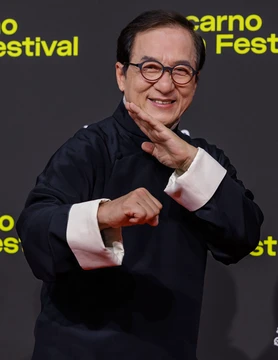
Taijiquan
The slowest art in the fastest man's arsenal—where stillness becomes the sharpest weapon.
Taijiquan—commonly known in the West as Tai Chi—is an internal Chinese martial art rooted in Taoist philosophy, emphasizing slow, circular movements, yielding to an opponent's force, and cultivating internal energy (qi). In the Jackie Chan film universe, it rarely takes center stage the way his trademark acrobatic, comedic kung fu does. Instead, Taijiquan functions as a philosophical counterweight: the calm, rooted, patient art that contrasts with the explosive, wire-assisted, slapstick combat that defines Chan's screen persona. When it does appear—whether as a training sequence, a quiet moment of meditation before a brawl, or a deliberate stylistic choice in a fight—it signals a shift in tone. The audience reads the slow spirals and rooted stances as a character finding their center, or as a master imparting wisdom that goes beyond mere physical technique. It is the 'still water' in a film otherwise defined by flying kicks and falling through windows.
- Style classification
- Internal (neijia) Chinese martial art
- Core principle
- Yielding, circular redirection, rootedness over brute force
- Chan's primary signature
- Acrobatic-comedic kung fu (chanman); Taijiquan is a complementary element
- Notable film context
- The Karate Kid (2010) – kung fu / internal training sequences
- Training lineage (Chan)
- Peking Opera stage combat, broad Chinese martial arts exposure
- Typical screen role
- Philosophical contrast, teaching moment, pre-fight centering ritual
Lore & Background
In the broader Chinese martial-arts tradition, Taijiquan is one of the 'internal' arts, grouped alongside Xingyiquan and Baguazhang. Its movements—Cloud Hands, Parting the Wild Horse's Mane, Single Whip—look almost meditative to an outside observer, but each spiral conceals a principle of structural alignment, timing, and the redirection of an opponent's momentum. The art's philosophy holds that the soft overcomes the hard, that the yielding body is paradoxically the most difficult to topple. Jackie Chan's on-screen identity is built almost entirely on the opposite impulse: speed, height, chaos, and physical comedy. A man who kicks a chair over his head, slides down a wall, and lands a spinning back-kick off a telephone pole does not, at first glance, need slow circular forms. Yet the films that work best often insert a beat of stillness. A character pauses, breathes, rolls the shoulders through a Tai Chi sequence, and the audience feels the tension reset. It is the narrative equivalent of a deep breath before a plunge. In training-sequenced films, the internal art also serves a storytelling function: the student must learn patience before power. The master does not simply hand over a finishing strike; he makes the student hold a stance, trace a circle, feel the ground through the soles of the feet. The lesson is as much about the mind as the body, and it gives the audience a moment to breathe alongside the character before the next explosion of acrobatic combat.
In Their Own Story
The courtyard is quiet. Morning mist curls around the stone lion statues. Mr. Han rolls his shoulders in slow arcs, palms turning like the hands of a clock, and Dre—still in his oversized hoodie, still skeptical—mimics the motion with all the grace of a man trying to fold a fitted sheet. "Again," Han says. Not angry. Patient. The kind of patient that is more exhausting than any shout. Dre's palms drift. His feet shuffle. The circle wobbles. Han steps in, places one palm on Dre's elbow, and guides the arc until the movement flows from the hip, not the shoulder. For a second, the boy's face changes. The frustration drains. Something settles. "There," Han says, and steps back. Behind them, the city hums. Somewhere, a siren. But in the courtyard, for one slow breath, there is only the sound of two people turning the same invisible wheel.
Reader's Guide
Taijiquan traces its lineage to Ming- and Qing-dynasty Chinese martial culture, blending Taoist internal cultivation with practical self-defense. Its forms—Yang, Chen, Wu, Sun—share a vocabulary of slow, continuous, circular movements designed to develop structural alignment, sensitive listening (ting jin), and the ability to redirect an opponent's force rather than meet it head-on. Jackie Chan's training background is rooted in Peking Opera stage combat and broad kung fu exposure rather than a single Tai Chi lineage. In his films, Taijiquan elements surface as a stylistic and philosophical tool rather than a system he performs in full form. The slow, rooted, spiraling quality is woven into training sequences and pre-fight moments to contrast with his signature acrobatic, wire-assisted, comedic action. Think of it as the 'internal' punctuation in a sentence otherwise written in exclamation marks. Prominent on-screen contexts include The Karate Kid (2010), where structured kung fu and internal training sequences form the emotional spine of the film, and various earlier action films where a quiet, centered moment of slow movement resets the narrative tension before a set-piece brawl. In Rumble in the Bronx (1995) and similar titles, the contrast between Chan's explosive external style and a more grounded, internal approach is a recurring visual motif. Execution on screen typically involves: rooted stance with knees slightly bent, weight centered low; slow, continuous arm spirals (Cloud Hands, Single Whip); coordinated breathing with each directional shift; and a final 'release' where the slow energy snaps into a quick, focused strike. The audience reads the transition from slow to fast as the character finding their true power.
Did You Know?
- Jackie Chan's foundational training came from Peking Opera stage combat, which incorporates a wide range of Chinese martial-arts movements including internal-style postures, even though his on-screen signature is the acr
- In The Karate Kid (2010), the training sequences emphasize patience, rootedness, and circular movement—principles drawn from internal martial-arts philosophy—before the student is ever shown a finishing technique.
- Taijiquan's core principle of 'yielding to redirect' is the philosophical opposite of the head-on, high-impact combat that defines most of Chan's fight choreography, which is why the two styles create such strong visual
- Chan is known for performing the vast majority of his own stunts and choreography, and his ability to shift between explosive acrobatic sequences and slow, controlled internal-style movement in a single scene is a hallma
More in Signature Moves & Martial Arts
Elsewhere in the Jackie Chan universe
Spotted an error? Know more?
This is a living reference — every entry is fact-audited, and reader corrections feed straight into our audit queue. Suggest an edit · See this site's audit record